Instrument Rating (IR) Course - DGCA Complied, Delhi
An Instrument Rating (IR) allows pilots to fly in Instrument Meteorological Conditions (IMC) - clouds, reduced visibility, and night operations - using only cockpit instruments. The IR is a mandatory component of DGCA CPL training and essential for any pilot pursuing a commercial airline career.
What Is an Instrument Rating?
An Instrument Rating (IR) is a DGCA-issued rating added to your PPL or CPL that authorises you to fly aircraft solely by reference to instruments - without visual reference to the ground or horizon. The IR involves both ground school theory (IFR procedures, approach plates, airspace) and practical instrument flying under the supervision of a DGCA-approved flight instructor.
Instrument Rating Training Content
Instrument Rating Requirements
- Valid DGCA PPL or CPL holder
- Minimum 50 hours cross-country flying as Pilot-in-Command (PIC)
- Valid DGCA Class 1 Medical Certificate
- Basic instrument flying exposure (recommended)
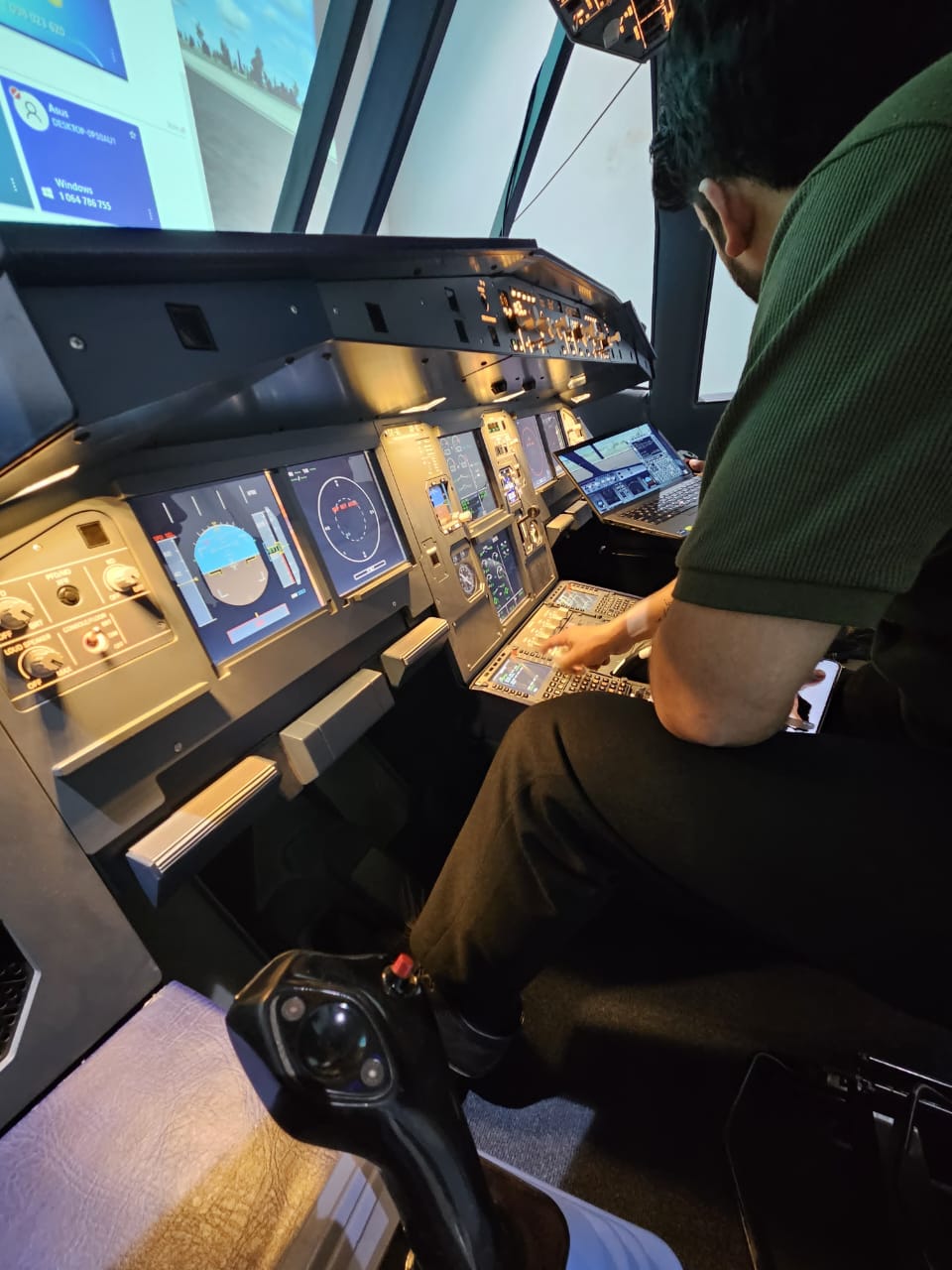
A320 Simulator Practice - Before You Fly
Airborne's in-house A320 FTD (Flight Training Device) is available for instrument approach practice - ILS, VOR, and NDB procedures - before your actual flying hours begin. Simulator practice reduces instrument flying costs significantly by building approach proficiency before transitioning to the aircraft.
Book A320 Simulator Session →Frequently Asked Questions
Is Instrument Rating required for CPL in India?
Instrument Rating (IR) is part of the CPL training requirement in India. DGCA requires instrument flying hours as part of the 200-hour CPL minimum. Most CPL graduates have their IR as part of their training.
How long does Instrument Rating training take?
2–3 months for ground and flight training. The IR involves ground instruction on IFR procedures, instrument approaches, and airspace, plus minimum flying hours on instruments under supervision.
Can I use the Airborne A320 simulator for IR practice?
Yes. Airborne's in-house A320 FTD is used for instrument approach practice - ILS, VOR, and NDB approaches - before actual flying. This significantly reduces flight hours needed for IR proficiency.